

Magazine » Lingerie 101 » Bras »
Why your sports bra is not working (impact-level mistakes)
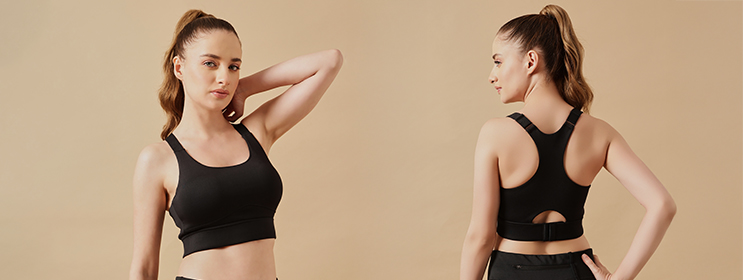
You bought the “high-impact” sports bra. Tightened the straps. Picked the expensive one too.
But somehow, you’re still adjusting it every few minutes, dealing with bouncing, sweat, discomfort, and irritation halfway through your workout.
Most women are wearing the wrong sports bra for the wrong impact level and that one mistake can completely ruin your workout experience. From painful HIIT sessions to yoga classes that somehow still feel restrictive, your sports bra may be failing you for reasons nobody really talks about.
This guide breaks down the most common sports bra mistakes women make, how to fix them, and how to finally choose a sports bra that actually supports your body and workouts properly.
What does ‘impact level’ actually mean?
Sports bras are designed based on movement intensity and workout type.
There are usually 3 categories:
1. Low-impact sports bras
Best for:
- Yoga
- Pilates
- Stretching
- Walking
2. Medium-impact sports bras
Best for:
- Strength training
- Cycling
- Dance workouts
- Gym training
3. High-impact sports bras
Best for:
- Running
- HIIT workouts
- Intense cardio
- Jump training
Choosing the wrong impact level is one of the biggest reasons your sports bra may not feel supportive.
Mistake #1: Wearing a low-impact bra for high-impact workouts
This is the most common sports bra mistake.
A light-support sports bra may feel comfortable during yoga or stretching, but the moment you start sprinting, jumping, or doing burpees, breast movement increases significantly.
That movement can lead to:
- Breast pain
- Shoulder strain
- Skin irritation
- Poor posture
- Workout discomfort
Also, breasts don’t contain muscles. Repeated unsupported movement can gradually affect breast tissue elasticity over time.
If your sports bra:
- Rides up
- Causes excessive bouncing
- Needs constant adjusting
- Makes you hold your chest while working out
…it’s simply not supportive enough for your activity level.
Mistake #2: Choosing an overly tight sports bra
A lot of women believe:
“The tighter the sports bra, the better the support.”
Not true.
An overly tight sports bra can restrict breathing, create side bulges, dig into shoulders, cause back pain, make workouts uncomfortable, and affect performance during exercise.
Real support comes from:
- A properly fitted underband
- Structured cups or good compression
- Wide, secure straps
- The correct impact-level design
Mistake #3: Ignoring how breasts actually move during workouts
Most women think breasts only move up and down during exercise.
In reality, breast movement happens in multiple directions:
- Up and down
- Side to side
- Forward and backward
That’s why basic compression bras often fail during high-impact workouts.
A well-designed high-impact sports bra usually includes:
- Encapsulation support (separate support for each breast)
- Wider underbands
- Broad shoulder straps
- Reinforced fabrics
- Strategic support panels
These features help reduce movement more effectively during intense workouts like running and HIIT.
Mistake #4: Wearing the same sports bra for every workout
Your yoga bra should not be your running bra.
Different workouts create different movement patterns and support requirements.
For yoga & Pilates:
You need:
- Flexibility
- Stretch
- Lightweight comfort
- Easy movement
For running & HIIT:
You need:
- Maximum bounce control
- Sweat management
- Strong support zones
- Better stability
Using the same sports bra for every workout is like wearing high heels to the gym because they technically fit your feet.
Mistake #5: Choosing style over support
Yes, strappy backs and trendy designs look amazing.
But if a sports bra has:
- Weak elastic
- Thin straps
- Poor support structure
- No support panels
…it may not survive a real workout session.
The best sports bras balance:
- Support
- Comfort
- Sweat-wicking fabric
- Stretch
- Breathability
- Style
Because a cute sports bra that constantly needs adjusting isn’t actually functional.
Mistake #6: Ignoring the band fit
The band does most of the support work — not the straps.
If your sports bra band:
- Rides up
- Rolls down
- Shifts during movement
- Feels loose even on the tightest hook
…it’s not giving proper support.
A good sports bra band should:
- Sit straight across your back
- Feel snug but comfortable
- Stay in place during workouts
- Not require constant readjusting
A strong underband is one of the biggest signs of a supportive sports bra.
Mistake #7: Keeping sports bras for too long
Sports bras stretch out much faster than regular bras because of:
- Sweat
- Frequent washing
- Constant stretching
- Workout friction
Over time, elasticity weakens and support reduces.
Signs it’s time to replace your sports bra:
- Loss of support
- Stretched-out band
- Slipping straps
- Increased bounce during workouts
- Fabric losing shape
If you work out regularly, it’s usually best to replace your sports bras every 6 to 12 months, depending on usage.
How to know if your sports bra is actually working
A good sports bra should make you forget you’re even wearing one.
During workouts, you should NOT experience:
- Painful bouncing
- Breast spillage
- Slipping straps
- Rolling underband
- Excessive sweat discomfort
- Digging straps
- Constant adjusting
Instead, you should feel:
- Supported
- Comfortable
- Secure
- Breathable
- Confident during movement
That’s how a properly fitted sports bra is supposed to feel.
Final thoughts
Most women don;t hate workouts, they hate uncomfortable workouts. And often, the real problem isn’t the exercise, it’s wearing the wrong sports bra for the impact level. The fix isn’t always ‘more compression’ or ‘smaller size’. It’s understanding your activity, your support requirements, breast movement, and how impact level actually works. Because once you wear the right sports bra, you stop adjusting and start focusing on your workout instead.

- 9 Lingerie Mistakes Sisters Help Each Other Avoid - August 14, 2026
- Best Friendship Day Gifts for Your Girl Gang (Because Mugs Are Officially Boring) - July 28, 2026
- Saree shapewear vs petticoat: What’s actually better under your saree? - July 2, 2026